
Enjoying the ad-free show? Please consider supporting it! Patrons get monthly bonus episodes, perks, and priority on their knitting questions. Lots of lively conversation, a book club and knit-along too! www.patreon.com/verypinkknits
Many thanks to Turtlepurl for supporting the podcast! Check out the self-striping yarns on their website – www.turtlepurl.com
Coupon code information:
For 10% off the total purchase *Excluding mini skein bundles or knitting needles*
A special note to Turtlepurl’s US customers from Emily, “I am thrilled to share that Turtlepurl Yarns is CUSMA-approved (no tariffs/no extra fees)! Thank you for your continued support!”
August Code – AUG26VP
Rhinebeck Raglan (Polly’s test knit)
Staci’s current project – Augusta
Strucket (Knit Picks website)
Our links
Polly’s Instagram
Polly’s Ravelry Notebook
VeryPink Instagram
Verypink.com
VeryPink Knits YouTube Channel
Staci’s Ravelry Notebook
Sign up for the free VeryPink Knits weekly newsletter




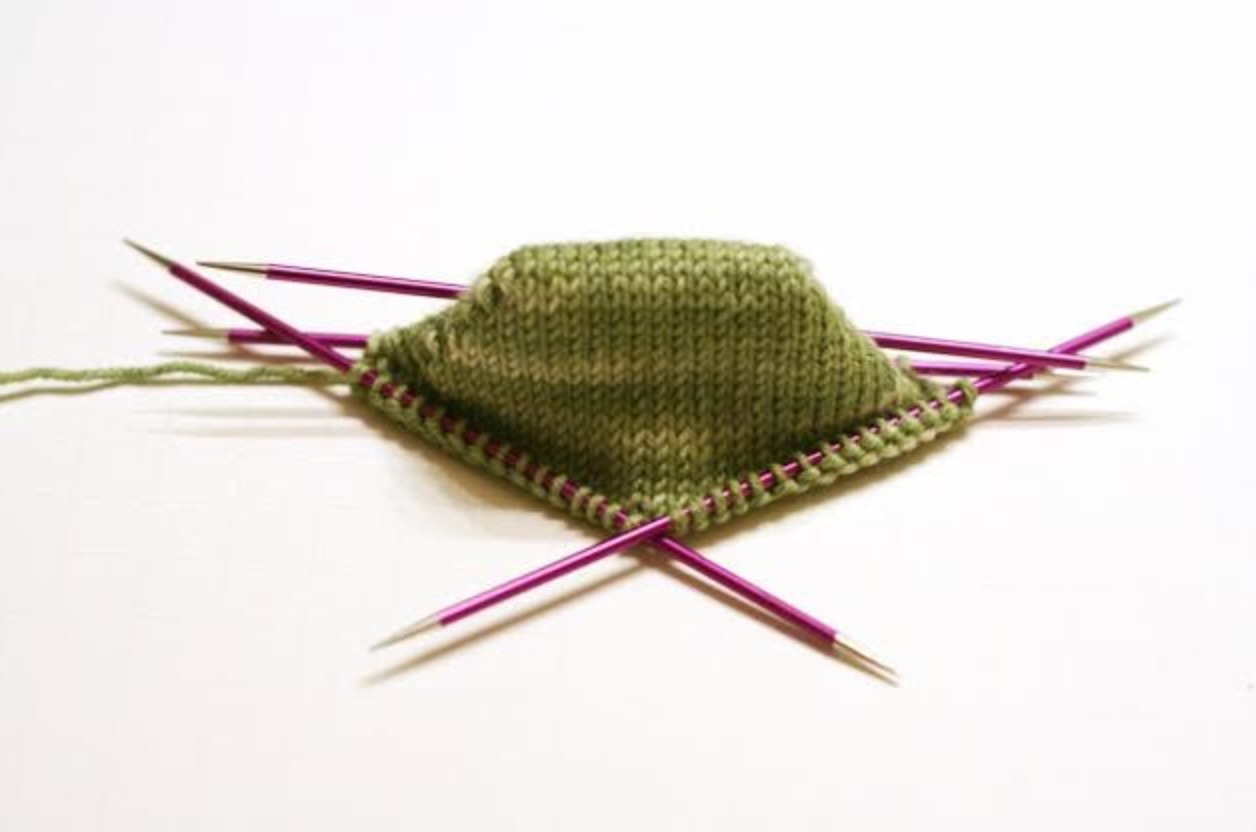
About Dane’s sock toes:
Yes, he can absolutely rip the worn-out toe, and then knit the new toe the cuff-down way!
When ripping out the old worn-out toe, he can put the loops (that was going through the last ripped-out round) on a needle, i.e. live stitches. So not manually picking up stitches like from a cast-on or side of fabric, which might result in uncomfortable ‘ridges’. But using the yarn (between the stitches on the first round of remaining sock) which were looping down to the last ripped-out round, and putting those loops on the needle.
But these loops are not the exact same stitches as when knitting the sock toe-up, but rather displaced half a stitch. But if the sock is stockinette it will be totally invisible since it’s still Vs, but going the other direction, where each leg of the stitch is made from adjacent stitches the original way. And if the sock isn’t stockinette, the toe usually is, so it doesn’t matter cause texture-pattern changes anyway.
If he still wants to knit the toes toe-up, he needs to use Kitchener-stitch (which leaves a totally invisible graft with no uncomfortable ridge) to graft the toe onto the sock, after ripping the worn-out toe out and putting the live stitches on a needle.
Hope you can understand my explanation…
/Pia from Sweden